Software Engineer & IT Jobs in Germany with Visa Sponsorship (Oct 2026)
All posts | Mar 16, 2026 · Updated Oct 1, 2026 | Felix Gerschau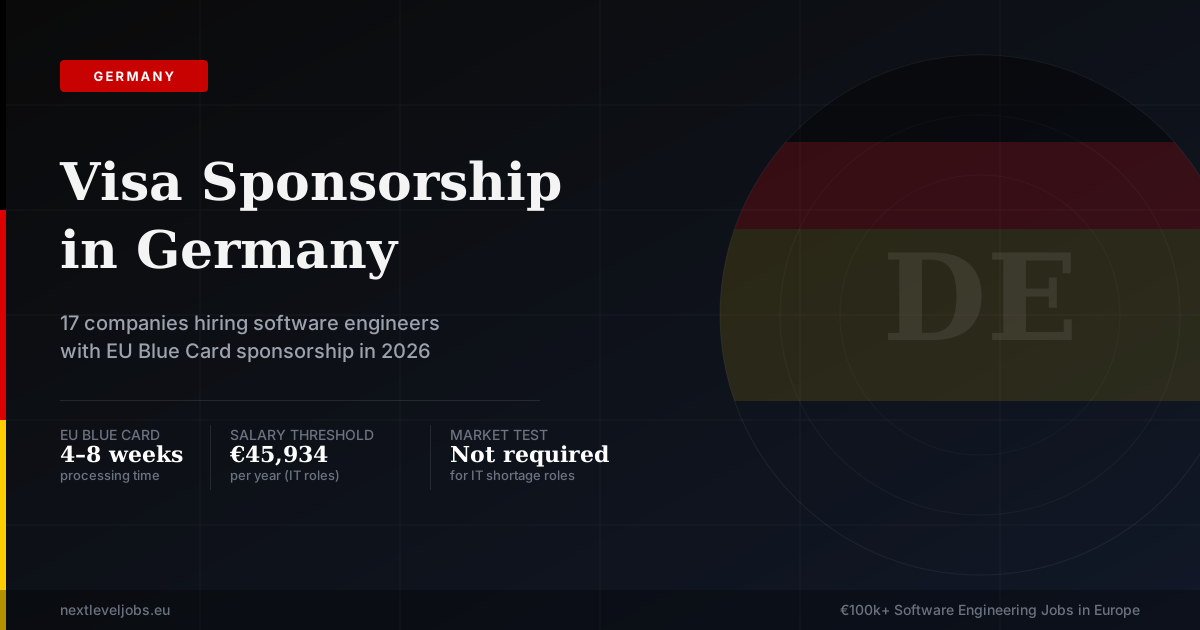
Germany has the largest tech sector in Europe, and international engineers are a significant part of its workforce. The EU Blue Card makes it relatively straightforward for companies to sponsor non-EU software engineers, and the salary threshold for IT roles is lower than you might expect. Companies like Delivery Hero, SAP, and Databricks sponsor visas routinely, and they are not alone.
TL;DR — Germany visa sponsorship at a glance
- Visa: EU Blue Card — employer-sponsored; no labour market test for IT roles, which are classified as a shortage occupation.
- Active sponsors: Delivery Hero, Zalando, SAP, and Databricks regularly hire and sponsor international engineers.
- Salary threshold (2026): €45,934/year gross for IT shortage occupations (€50,700/year for other roles).
- Processing time: 4–12 weeks within Germany, or 6–20 weeks for embassy applications from abroad.
- Find open roles: nextleveljobs.eu/country/de

Software Engineering Manager, AI/ML, CodeAI Foundations
GoogleMunich€156k–159kStaff Software Engineer, Site Reliability Engineering
GoogleMunich€156k–159kStaff Software Engineer, Site Reliability Engineering, Google Cloud
GoogleMunich€156k–159k
Why Germany?
- Competitive salaries: Senior software engineers in Germany typically earn between €75,000 and €120,000 in base salary. At top-paying companies — particularly US tech firms and trading companies with German offices — €100k+ total compensation is achievable. Browse current openings at nextleveljobs.eu/country/de.
- Multiple tech hubs: Berlin is the startup and scale-up capital, with Delivery Hero, Zalando, and Personio headquartered there. Munich has Google, Apple, and BMW. Hamburg has a strong e-commerce and media tech cluster.
- Strong employment protections: German labour law provides notice periods of up to six months, a minimum of 20 days annual leave (most companies offer 28–30), and works council co-determination rights.
- EU work rights: After 21 months with an EU Blue Card (and basic German language skills at B1 level), you can apply for permanent settlement. Without language proof, the standard path is 33 months. Permanent residency then gives you the right to work across the EU.
What Is the EU Blue Card and How Does It Work?
The EU Blue Card is the primary work visa for qualified non-EU professionals moving to Germany. It requires a recognised university degree (or equivalent professional experience under Germany’s updated Skilled Immigration Act, the Fachkräfteeinwanderungsgesetz) and a job offer with a salary above a specified threshold.
For IT and engineering roles, which fall under “shortage occupations,” the salary threshold is lower than the general Blue Card requirement. As of 2026, the threshold for shortage occupations is €45,934 per year. The general threshold is €50,700 per year. Most software engineering roles at the companies below comfortably exceed both thresholds. Notably, Germany now also allows IT specialists with at least three years of professional experience to qualify for a Blue Card without a formal degree.
Your employer provides the job contract, and you apply for the Blue Card at the German embassy or consulate in your home country (or at the local foreigners’ authority if you are already in Germany). Processing times vary: typically 4–12 weeks within Germany, or 6–20 weeks for embassy applications from abroad. For full details, see the official Make it in Germany page on the EU Blue Card.
17 Companies That Sponsor Visas in Germany
Delivery Hero
A global food delivery platform headquartered in Berlin. Delivery Hero has a highly international engineering team and is one of the most active visa sponsors in Berlin. They hire across backend, mobile, data engineering, ML, and platform infrastructure. Senior engineers report total comp of €85k–€130k on levels.fyi.
SAP
Europe’s largest enterprise software company, headquartered in Walldorf near Heidelberg. SAP sponsors Blue Cards at scale and hires for cloud engineering, database internals, AI/ML, enterprise applications, and security. Senior engineers report total comp of €85k–€120k on levels.fyi.
Databricks
A data and AI platform company with a growing Berlin office. Databricks sponsors Blue Cards and hires for data platform engineering, backend systems, and ML infrastructure.
Google has engineering offices in Munich, Berlin, and Hamburg. They sponsor Blue Cards and hire across infrastructure, Cloud, Ads, Android, and machine learning.
Meta
Meta has an engineering office in Berlin and sponsors Blue Cards for qualified engineers. Roles include backend, infrastructure, and Reality Labs engineering.
Zalando
Europe’s largest online fashion platform, headquartered in Berlin. Zalando has a large and international engineering organisation and sponsors Blue Cards. Roles cover backend, data engineering, ML, frontend, and logistics technology. Senior engineers report total comp of €90k–€135k on levels.fyi.
Personio
A Munich-based HR software company and one of Germany’s highest-valued startups. Personio sponsors Blue Cards and hires for full-stack, backend, platform, and data engineering.
Siemens
A global industrial technology conglomerate headquartered in Munich. Siemens sponsors Blue Cards and hires software engineers for industrial IoT, cloud platforms, embedded systems, and digital twin technology.
Stripe
The payments infrastructure company has a Berlin office and sponsors Blue Cards for engineers working on payments systems, infrastructure, and developer tools.
N26
A Berlin-based digital bank that sponsors Blue Cards. N26 hires for backend, mobile, security, and data engineering roles.
Celonis
A Munich-based process mining company and one of Germany’s most valuable enterprise software companies. Celonis sponsors Blue Cards and hires for platform engineering, backend, and data science roles.
About You
A Hamburg-based fashion e-commerce company. About You sponsors Blue Cards and hires for backend, frontend, data engineering, and infrastructure roles.
Amazon / AWS
Amazon has engineering teams across Berlin, Munich, and Dresden. They sponsor Blue Cards and hire for software development, cloud infrastructure, and operations engineering.
Miro
The visual collaboration platform has a Berlin office and sponsors Blue Cards. They hire across full-stack, backend, and platform engineering.
SoundCloud
The audio streaming platform headquartered in Berlin. SoundCloud sponsors Blue Cards and hires for backend, audio processing, and infrastructure engineering.
Contentful
A Berlin-based headless CMS company. Contentful sponsors Blue Cards and hires for backend, platform, and full-stack engineering roles.
Trade Republic
A Berlin-based investment platform and one of Europe’s highest-valued fintech companies. Trade Republic sponsors Blue Cards and hires for backend, mobile, infrastructure, and security engineering.
Open to other countries too? Browse visa sponsorship jobs across Europe, where every role's job ad confirms sponsorship.
How to Apply
- Find the role: Browse companies in Germany that sponsor work visas through their careers pages, or use nextleveljobs.eu/country/de to find €100k+ roles at companies that hire internationally.
- Apply directly: Submit your application on the company’s careers page. Many German companies accept English-language applications for engineering roles.
- Interview: Expect 3–5 rounds including a technical screen, coding challenge or live coding session, system design, and team fit interviews. Remote interviews are standard for international candidates.
- Receive your offer: The job contract will specify your salary (which must meet the Blue Card threshold) and start date. The company will typically provide guidance on the visa process.
- Apply for the Blue Card: With your signed contract and degree recognition, apply at the German embassy or consulate in your country. Some companies have immigration lawyers who handle this process for you.
- Relocate: Once your visa is approved, travel to Germany and register your address at the local citizens’ office (Bürgeramt). Your Blue Card is then issued by the local foreigners’ authority (Ausländerbehörde).
Tips to Increase Your Chances
- Tailor your CV to a European format: Two pages maximum. Include a clear summary, list technologies you have worked with, and quantify your impact where possible.
- Highlight distributed or remote experience: German companies hiring internationally want to know you can work effectively in English and across time zones.
- Mention visa readiness in your cover letter: A sentence confirming you understand the EU Blue Card process and are ready to relocate removes uncertainty for the hiring team.
- Check degree recognition: Germany requires your university degree to be recognised. Use the anabin database to check if your degree is recognised before applying.
- Use job boards that filter by sponsorship: Not all German job listings mention visa sponsorship explicitly. Use boards like Next Level Jobs EU that focus on companies known to hire internationally.
Get weekly €100k+ job alerts for Germany, straight to your inbox.
No spam. Unsubscribe anytime.
Germany’s combination of a large tech sector, strong worker protections, and a streamlined Blue Card process makes it one of the most practical EU destinations for software engineers needing visa sponsorship. Browse open roles at companies that hire internationally in Germany at nextleveljobs.eu/country/de.