7 Most In-Demand Programming Languages in Europe (2026) — Salaries + Jobs
All posts | Mar 16, 2026 | Felix Gerschau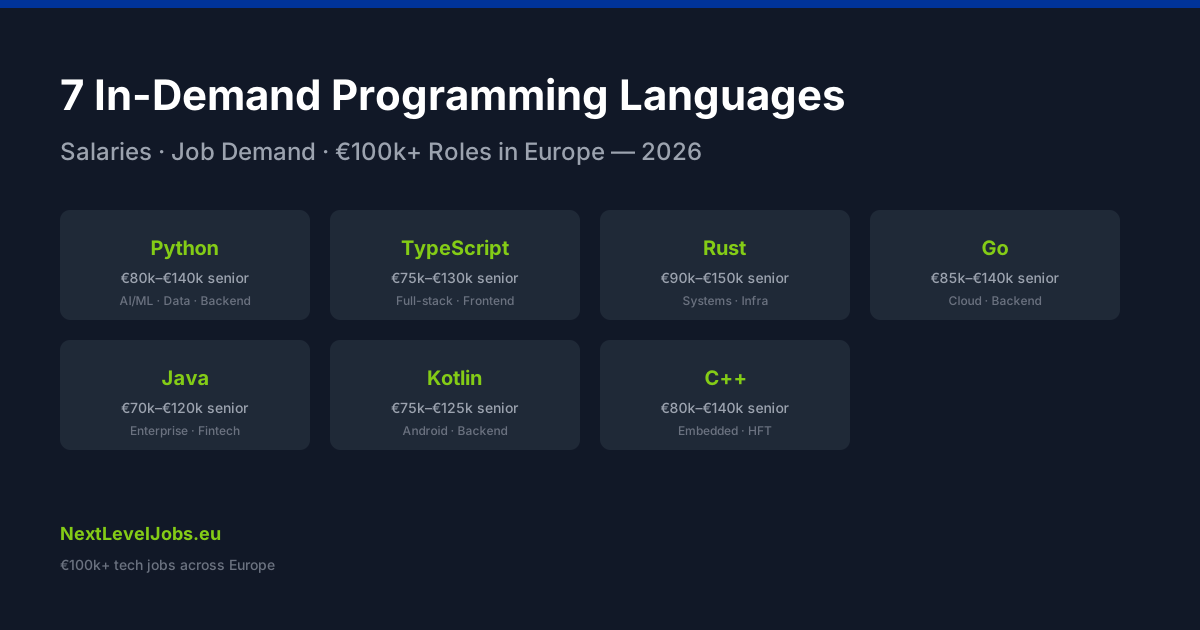
This is a job market post, not a learn-to-code guide. The question here is which languages actually appear in senior EU job listings at companies that pay €100k+ — and what the realistic salary range looks like in Amsterdam, Berlin, London, Dublin, and Zurich. Data sourced from levels.fyi and Glassdoor, 2025–2026. Rankings by EU job listing volume and presence in high-comp roles, not global developer surveys.
TL;DR — EU job demand + senior salary ranges
- Python: Highest EU listing volume; ML/data roles at €80k–€140k senior in Amsterdam and London
- TypeScript: High volume across all cities; fullstack/frontend at €75k–€130k; broadest access to product companies
- Java: Large German enterprise + EU fintech market; €75k–€125k Berlin, €90k–€130k Amsterdam
- Kotlin: JVM replacement trend in fintech and e-commerce; €75k–€130k in Germany and Netherlands
- Go: Infrastructure and fintech premium; €95k–€155k at Amsterdam and London companies
- Rust: Trading firms and systems infrastructure; €110k–€170k; narrowest market, highest ceiling
- C++: Concentrated at ASML and trading firms; €100k–€170k; lower volume than Python or Java
Python
Python has the highest raw job listing volume of any language across European tech postings in 2026, driven by the continued expansion of ML/AI engineering roles. The companies hiring senior Python engineers in Europe are not startups — they are Booking.com, Adyen, and Netflix in Amsterdam; DeepMind, Google, and Palantir in London; and SAP and Zalando in Berlin.
The split is roughly 40% ML/data engineering and 60% backend. At product companies (Booking.com, Adyen), senior Python backend engineers earn €80k–€120k. At companies with dedicated ML infrastructure teams — DeepMind, Google DeepMind London, and trading firms using Python for research — the range pushes to €120k–€160k+. The volume of Python listings means more competition at mid-level, but senior Python engineers with specialisation in ML infrastructure or distributed systems consistently clear €100k across Amsterdam, London, and Dublin.
Senior salary range (EU): €80,000–€140,000 total compensation; higher at trading firms and ML-specialist roles.
TypeScript
TypeScript is the dominant language for frontend and fullstack roles across European product companies. Zalando (Berlin), N26 (Berlin), Adyen (Amsterdam), Intercom (Dublin), and Wise (London) all run TypeScript-heavy stacks. The language also shows up heavily in Node.js backends at companies that unified their stack — reducing the back/frontend distinction at the senior level.
TypeScript gives you the broadest access of any language to €100k+ roles across all five major EU tech cities. It is not the highest-paying specialisation on this list — that is Rust at trading firms — but it has more senior openings at any given time than any other language except Python. Staff and principal-level TypeScript engineers at product companies like Adyen or Wise are at €120k–€160k. Senior fullstack at a mid-stage startup in Berlin or Amsterdam is more typically €80k–€110k, with equity on top.
Senior salary range (EU): €75,000–€130,000 total compensation across Amsterdam, Berlin, London, and Dublin.
Java
Java is the backbone of the German enterprise and EU fintech market. SAP (Berlin/Walldorf), Deutsche Bank (Frankfurt), ING (Amsterdam), ABN AMRO (Amsterdam), and Zalando (Berlin) all maintain large Java codebases. The Germany €100k+ companies list is disproportionately Java-heavy — if you want to work at a large German tech company or bank, Java proficiency is the baseline expectation.
Java is not the most exciting language on this list, but it has the most consistent job density in Germany and the Netherlands. Berlin and Frankfurt together represent the largest concentration of senior Java roles in Europe. Spring Boot and microservices architecture are the dominant patterns. Senior Java engineers at Deutsche Bank or ING earn €85k–€125k in Germany; the ceiling rises to €120k–€140k at companies like Adyen in Amsterdam.
Senior salary range (EU): €75,000–€125,000 in Berlin and Frankfurt; €90,000–€130,000 in Amsterdam.
Kotlin
Kotlin's footprint in the EU job market has two distinct segments: Android development and backend JVM services. The backend segment is what pushes it onto this list — Zalando (Berlin), ING (Amsterdam), N26 (Berlin), and Revolut (London) have all migrated significant backend services from Java to Kotlin. JetBrains, the company that created Kotlin, has a major engineering office in Amsterdam and is an active hirer.
For Android, every major EU consumer tech company — Zalando, Delivery Hero, Booking.com — has active Kotlin Android roles. At the senior level, Android and backend Kotlin roles pay similarly. The combined volume of Kotlin listings across Germany and the Netherlands makes it a practical alternative to pure Java in those markets, with slightly higher comp at companies that treat Kotlin as a premium hire.
Senior salary range (EU): €75,000–€130,000 in Germany and the Netherlands; €85,000–€135,000 for senior backend Kotlin at fintech companies in Amsterdam and London.
Go
Go is the language of choice for infrastructure and high-throughput backend services at European fintech and platform companies. Adyen (Amsterdam), Cloudflare (London), Grafana Labs (remote/EU), and Booking.com (Amsterdam) are among the most active EU employers for Go engineers. At trading firms — Optiver, IMC Trading, Flow Traders in Amsterdam — Go appears alongside Rust and C++ for low-latency components.
Go roles in Europe carry a comp premium relative to Java or TypeScript for equivalent seniority. The pool of Go engineers is smaller, which pushes salaries up at companies that have committed to it as a core stack language. Senior Go engineers at infrastructure companies in Amsterdam and London are consistently at €95k–€130k, with the top end — trading firms, staff-level infra roles — reaching €155k+. See the Netherlands €100k+ companies list for specific Go-hiring employers and verified salary data.
Senior salary range (EU): €95,000–€155,000 at infrastructure and fintech companies in Amsterdam and London.
Rust
Rust has the highest salary ceiling on this list and the narrowest job market. The EU companies hiring senior Rust engineers are concentrated in high-frequency trading (Optiver, IMC Trading, Flow Traders in Amsterdam; Jane Street in London and Zurich) and systems infrastructure (Cloudflare London, Parity Technologies, Canonical). A senior Rust engineer at a trading firm in Amsterdam is looking at €110k–€170k total compensation — among the highest in the EU market for an individual contributor.
Rust is the right target if you are optimising for maximum comp at a specialist firm, not breadth of opportunity. Job volume is a fraction of Python or Java listings, and most roles require deep systems programming experience — not just Rust syntax familiarity. Trading firms in particular care about low-latency performance engineering, not framework knowledge. If that's your background, Amsterdam is the primary EU market: nextleveljobs.eu/country/nl lists current openings at Optiver, IMC Trading, and other trading firms actively hiring Rust engineers.
Senior salary range (EU): €110,000–€170,000 at trading firms in Amsterdam, London, and Zurich.
C++
C++ demand in Europe is concentrated rather than broad. The employers are ASML (Eindhoven, the Netherlands — the company that makes EUV lithography machines for chip manufacturing), high-frequency trading firms in Amsterdam and London (Optiver, IMC Trading, Jane Street), and embedded/automotive systems companies in Germany (Bosch, Continental, Siemens). Outside those sectors, C++ listings are sparse.
Within those sectors, the compensation is as high as anything on this list. ASML is one of the highest-paying engineering employers in the Netherlands — senior C++ engineers there earn €90k–€140k, with senior-plus roles higher. Trading firms pay €100k–€170k for senior C++ engineers with low-latency experience. German automotive and embedded roles sit lower, typically €75k–€110k. If you have C++ systems experience, the Netherlands is the strongest EU market: nextleveljobs.eu/country/nl covers current ASML and trading firm openings. See also the Netherlands €100k+ companies post for verified salary data at ASML and Optiver.
Senior salary range (EU): €90,000–€140,000 at ASML; €100,000–€170,000 at trading firms in Amsterdam and London.
Which language gives you the best shot at €100k in Europe?
Python and TypeScript give you the broadest access. They have the most €100k+ job listings across all five major EU tech cities — Amsterdam, Berlin, London, Dublin, Zurich — and the target companies include Adyen, Booking.com, Zalando, Stripe, and every major FAANG office. If you want optionality and the ability to move cities or switch between product companies and fintech, Python or TypeScript is the right foundation. Senior engineers with either language who target the right companies (see Netherlands and Germany) clear €100k without exceptional difficulty at the senior level.
Rust and Go are the route to premium comp at a narrower set of employers. Trading firms and infrastructure companies in Amsterdam and London pay €110k–€170k for senior Rust engineers and €95k–€155k for Go — significantly above the Python/TypeScript ceiling at comparable companies. The trade-off is that the job market is smaller, the interviews are more technically demanding, and relocation to Amsterdam or London is effectively required. If you are targeting maximum individual contributor compensation and have the systems engineering background, Rust at a trading firm is the highest-comp path in the EU.
Java and Kotlin are the most direct route into the large German enterprise and EU fintech market. If you are targeting Berlin, Frankfurt, or Amsterdam-based banks and fintech companies — the market covered in the Germany and Netherlands €100k+ posts — Java or Kotlin is the practical choice. €100k+ is achievable at senior level at the right companies; the ceiling is lower than trading firms, but the job volume is higher and the hiring process is more standardised.
The full breakdown of which cities to target for each stack is in the Top 5 European Cities for Software Engineers post.
Frequently asked questions
Which programming language pays the most in Europe?
Rust and Go at trading firms in Amsterdam, London, and Zurich. Senior Rust engineers at Optiver, IMC Trading, and Jane Street earn €110k–€170k. Go engineers at infrastructure and fintech companies earn €95k–€155k. Both are narrow markets — the volume of listings is much lower than Python or Java. See the Netherlands €100k+ companies list for specific trading firm salary data.
Is Python still in demand in Europe in 2026?
Yes — Python has the highest raw job listing volume of any language in European tech in 2026. ML/AI engineering roles at Booking.com, Adyen, DeepMind, and Google have driven significant growth. Senior Python engineers targeting ML infrastructure or backend at product companies can expect €80k–€140k in Amsterdam or London.
Is Java still worth learning for the European job market?
Yes, particularly for Germany and the Netherlands. The German enterprise and fintech sector — SAP, Deutsche Bank, ING, Zalando — runs heavily on Java backends. Berlin and Frankfurt have the largest concentration of senior Java roles in Europe. Senior Java engineers earn €75k–€125k in Berlin, rising to €90k–€130k at Dutch fintech companies. See the Germany salary guide for detailed breakdowns.
What European companies hire Go engineers?
Adyen (Amsterdam), Cloudflare (London), Booking.com (Amsterdam), Grafana Labs (remote/EU), and trading firms including Optiver and IMC Trading. Go roles at infrastructure and fintech companies regularly advertise senior salaries of €95k–€155k. Browse the Netherlands and Germany €100k+ company lists for Go-hiring employers.
Which language should I learn to target €100k+ roles in Europe?
Python or TypeScript for breadth — the most €100k+ listings across Amsterdam, Berlin, London, and Dublin. Rust or Go for premium comp at trading firms and infrastructure companies. Java or Kotlin for the large German enterprise and EU fintech market. Our top EU cities guide covers which cities to target for each stack, and the Netherlands visa sponsorship guide can help if you need relocation support.
Is C++ in demand in Europe?
Demand is concentrated: ASML (Eindhoven), trading firms in Amsterdam and London (Optiver, IMC Trading, Jane Street), and embedded/automotive companies in Germany. Volume is lower than Python or Java, but senior C++ engineers at trading firms earn €100k–€170k — among the highest on this list. The Netherlands €100k+ companies post has verified salary data for ASML and Optiver.
Is Kotlin used outside Android development in Europe?
Yes. Backend Kotlin on the JVM is a significant and growing segment, particularly in fintech and e-commerce. Zalando (Berlin), ING (Amsterdam), and N26 (Berlin) run Kotlin backends at scale. JetBrains has a major office in Amsterdam and hires extensively. Senior backend Kotlin roles pay €75k–€130k in Germany and the Netherlands.